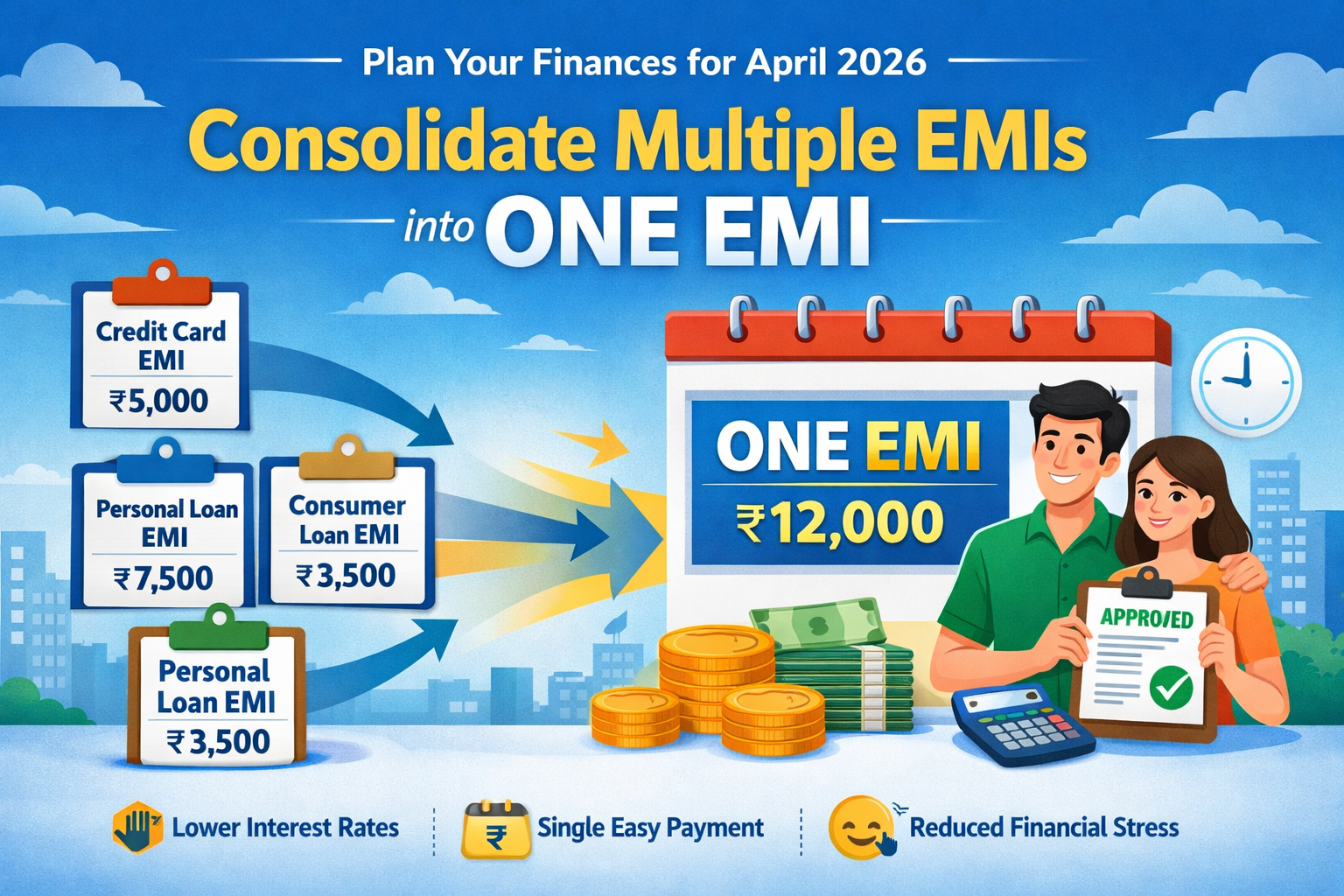
What is EMI Consolidation?
EMI consolidation means combining multiple ongoing loans into a single loan with one EMI, one interest rate, and one repayment schedule.
Instead of paying:
-
₹5,000 (credit card EMI)
-
₹7,500 (personal loan EMI)
-
₹3,500 (consumer loan EMI)
You convert everything into:
👉 One EMI of ~₹12,000–₹13,000 (depending on tenure & rate)
This process is also known as debt consolidation and is widely used to simplify finances and reduce stress.
Why EMI Consolidation is Trending in April 2026
In 2026, borrowers are shifting towards consolidation due to:
-
Increased digital lending options
-
Rising interest rates on unsecured credit
-
Over-dependence on credit cards
-
Need for better financial discipline
More importantly, RBI-regulated lenders now offer instant consolidation loans with minimal documentation, making the process faster than ever.
Signs You Need EMI Consolidation
If you relate to any of these, consolidation can help:
-
You have 3 or more active EMIs
-
You’re missing payment dates or paying late fees
-
Your EMI outflow exceeds 40–50% of income
-
You rely on credit cards to pay other EMIs
-
You feel financially stuck every month
👉 These are early warning signs of debt stress
How EMI Consolidation Helps in Financial Planning
1. Better Cash Flow Management
One EMI means predictable monthly outflow. You can plan expenses more efficiently.
2. Lower Interest Burden
High-interest debts (like credit cards at 30–40%) get replaced with lower-interest personal loans (~10–16%).
3. Improved Credit Score
Timely repayment of one EMI improves your credit profile faster than managing multiple accounts.
4. Reduced Financial Stress
No more tracking multiple due dates or worrying about penalties.
5. Structured Debt Repayment
You get a clear timeline to become debt-free.
Step-by-Step Guide to Merge Multiple EMIs into One
Step 1: List All Your Debts
Include:
-
Loan type
-
Outstanding amount
-
Interest rate
-
EMI amount
-
Remaining tenure
Step 2: Calculate Total Liability
Example:
| Loan Type | Outstanding | EMI |
|---|
| Personal Loan | ₹2,00,000 | ₹7,500 |
| Credit Card | ₹1,00,000 | ₹5,000 |
| Consumer Loan | ₹50,000 | ₹3,500 |
👉 Total Debt = ₹3,50,000
👉 Total EMI = ₹16,000
Step 3: Apply for a Consolidation Loan
You can apply through FinCrif to:
-
Merge all debts
-
Get a new loan of ₹3.5 lakh
-
Pay off existing lenders
Step 4: Choose a Suitable Tenure
-
Short tenure = higher EMI, less interest
-
Long tenure = lower EMI, more flexibility
Step 5: Close Old Loans
The new lender clears existing dues, leaving you with just one EMI
Example: Before vs After Consolidation
Before
-
Total EMI: ₹16,000
-
Interest rates: 18%–36%
-
Multiple due dates
After
-
New EMI: ₹11,500 (approx.)
-
Interest rate: ~12%
-
One due date
👉 Savings + Simplified life
Eligibility for EMI Consolidation in India (2026)
To consolidate your EMIs, you generally need:
-
Age: 21–60 years
-
Stable income (₹15,000+ monthly)
-
CIBIL score: 650+ (preferred)
-
Existing loan repayment history
Even if your score is slightly low, FinCrif helps match you with suitable lenders.
Documents Required (Minimal / Digital)
-
Aadhaar Card
-
PAN Card
-
Bank statements (last 3–6 months)
-
Salary slips (if salaried)
👉 Fully paperless & digital process